
Office Chair for Tall Person Reviews & Buying Guide (2026)
Finding the best office chair for tall person starts with proper measurements. Most standard chairs are too low and shallow for users over 6 feet. This guide explains ideal seat height (22–24 inches), deeper seat pans, and adjustable lumbar support for true ergonomic alignment.
We review top ergonomic and big-and-tall office chairs with Class 4 gas lifts, tall backrests, and 400–500 lb capacity options. Whether you’re 6’2″ or 6’7″+, discover chairs that reduce back pain, improve circulation, and properly support long legs and tall frames.
If you’re over 6 feet (183 cm) tall, you already know the quiet frustration of sitting at a standard office desk.
Your knees press against the underside of the desk because your femur length exceeds what the workspace was designed for. Your thighs angle upward because the seat height maxes out at 19–20 inches (48–51 cm), while your popliteal height demands 21–23 inches (53–58 cm) for proper support. Your shoulder blades slam into the headrest, which was engineered for someone 5’8″ (173 cm), not 6’4″ (193 cm).
Over time, these design mismatches stop being annoying and start becoming dangerous.
A standard chair forces a tall body into compromised biomechanics:
- Posterior pelvic tilt from insufficient seat depth
- Lumbar flexion at L4–L5, increasing disc pressure
- Forward head posture, adding up to 60 lbs (27 kg) of cervical strain
- Unsupported femurs, restricting circulation behind the knees
Most commercial office chairs are engineered around the 50th percentile male (approximately 5’9″ / 175 cm). If you’re 6’2″ (188 cm), 6’5″ (196 cm), or taller, you are statistically outside the core design range. That means improper seat pan depth, inadequate backrest height, and gas cylinders that simply do not extend high enough.
The result? Chronic lower back pain. Neck stiffness. Tingling legs. Shoulder fatigue. Reduced productivity. Long-term spinal stress.
This guide exists to solve that.
Contents
- 1 What You Will Learn
- 2 5 Essential Features to Look for in an Office Chair for Tall People
- 3 Top 3 Ergonomic Office Chairs for Tall People
- 4 Best Office Chair for Tall Person with High Weight Capacity
- 5 Summary: Structural Must-Haves for Big & Tall
- 6 Why Height Range Matters in an Office Chair for Tall Person
- 7 How a Gas Lift Cylinder Actually Works
- 8 Is a 21-Inch Maximum Seat Height Enough for 6’4″+?
- 9 The Bottom Line
- 10 The Spinal Health Imperative for Tall Users
- 11 Lumbar Alignment: Hitting L4–L5 Precisely
- 12 Thoracic Support: Preventing Upper Back Collapse
- 13 The Link to Sciatica and Chronic Pain
- 14 The Takeaway
- 15 Budget Chairs Under $300 That Work for Tall Users
- 16 Honest Budget Considerations
- 17 The Bottom Line
- 18 FAQ’s — Tall Office Chair Questions
What You Will Learn
In this in-depth guide, you’ll discover:
- The exact ergonomic measurements tall users need (with inch and cm benchmarks)
- How to calculate your required seat height using popliteal height
- Why Class 4 gas cylinders matter for taller and heavier frames
- The science behind proper L4–L5 lumbar alignment
- How to evaluate seat depth, backrest height, and headrest placement correctly
- The non-negotiable features every true office chair for tall person must have
By the end, you will understand not just which chair to buy — but why it fits your body.
5 Essential Features to Look for in an Office Chair for Tall People
If you are searching for the right office chair for tall person, you are not shopping by brand — you are shopping by anthropometrics. Tall users (6’0″–7’0″+ / 183–213+ cm) must evaluate chairs against five non-negotiable structural specifications. Anything less is a compromise that will surface as back pain, circulation issues, or postural collapse within months.
Below is the professional buyer’s framework I use when evaluating chairs for tall clients.
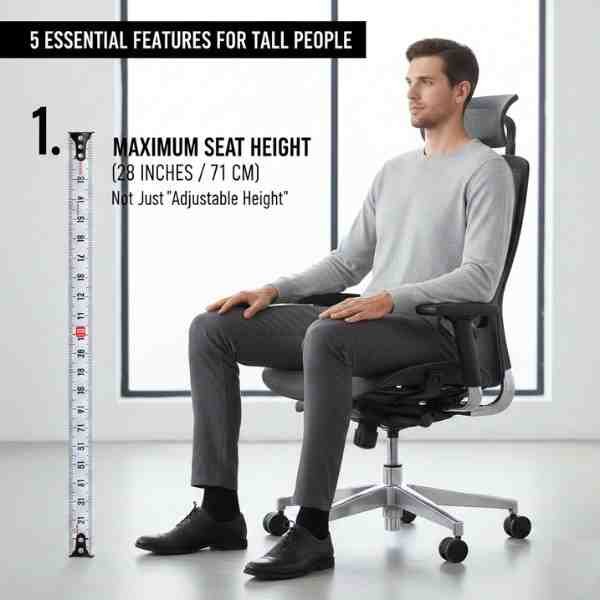
1. Maximum Seat Height (Not Just “Adjustable Height”)
Most mainstream chairs top out at 19–20 inches (48–51 cm). For a tall user:
- 6’0″–6’2″ (183–188 cm): ideal seat height is 20–21.5 inches (51–55 cm)
- 6’3″–6’6″ (190–198 cm): 21.5–23 inches (55–58 cm)
- 6’7″+ (200 cm+): often 23–24+ inches (58–61 cm)
Your required height is based on popliteal height (floor to underside of knee). If the seat is too low, your hips drop below your knees, causing posterior pelvic tilt and L4–L5 disc compression.
Look specifically for a high-stroke Class 4 gas cylinder rated for extended elevation.
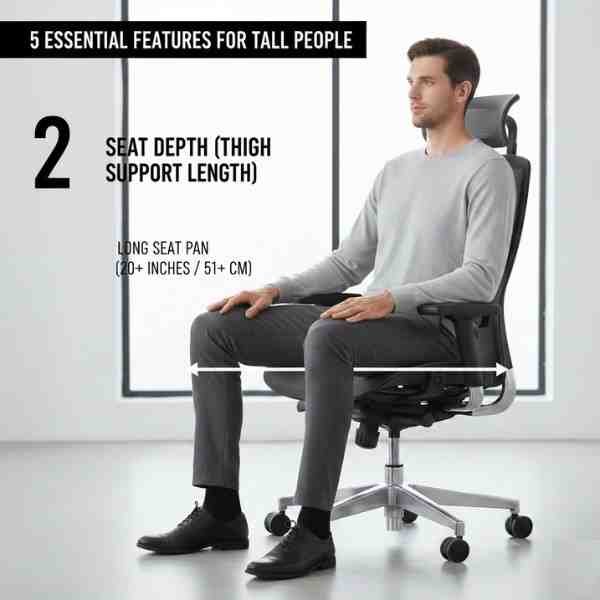
2. Seat Depth (Thigh Support Length)
Seat depth is where most chairs fail tall users.
Average chairs: 17–18 inches (43–46 cm)
Tall users typically require: 19–22 inches (48–56 cm)
If your femur length exceeds the seat pan, you lose 2–4 inches of thigh support. This increases pressure behind the knees and forces slouching to compensate.
Ideal fit:
- 2–3 inches (5–8 cm) of clearance between the seat edge and the back of your knee
- Full femur support without cutting into the popliteal space
A sliding seat pan is strongly preferred.
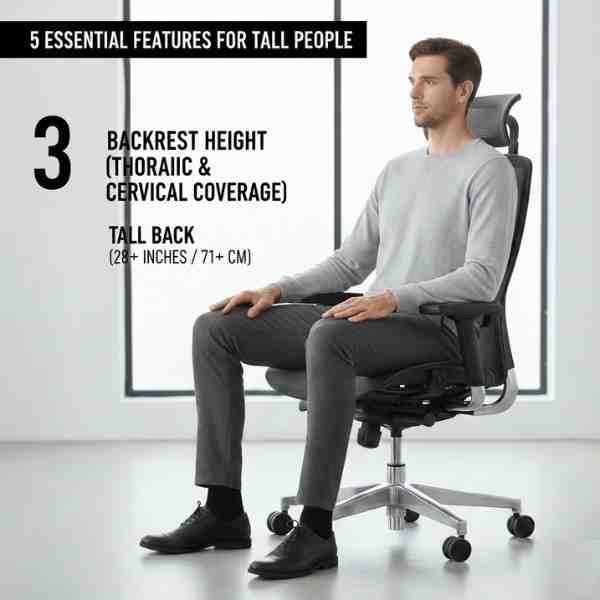
3. Backrest Height (Thoracic & Cervical Coverage)
Standard backrests are designed for someone with a torso length of ~24–26 inches (61–66 cm). Tall users often measure 27–32 inches (69–81 cm) seated torso height.
Without sufficient backrest height:
- Lumbar support lands too low
- Shoulder blades sit above the chair frame
- Headrests hit the upper thoracic spine instead of the occiput
For users over 6’3″ (190 cm), look for:
Headrest with at least 2–4 inches (5–10 cm) vertical travel
Backrest height of 26–30+ inches (66–76+ cm)
Adjustable lumbar that aligns with L4–L5
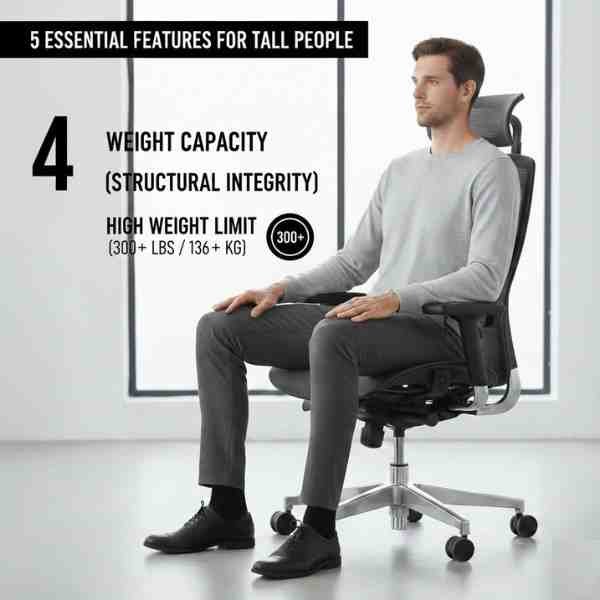
4. Weight Capacity (Structural Integrity)
Tall does not always mean heavy — but mass distribution matters.
Standard office chairs: 250–275 lbs (113–125 kg)
Recommended minimum for tall frames: 300 lbs (136 kg)
Heavy-duty options: 350–500 lbs (159–227 kg)
Why it matters:
- Stronger tilt mechanisms
- Reinforced seat plates
- Higher-quality cylinders
- Reduced long-term sagging
A chair operating near its weight limit degrades faster and loses ergonomic consistency.
5. Base Width (Stability for Long Femurs)
Long legs shift your center of gravity forward. Narrow 24-inch (61 cm) bases become unstable when reclining.
Look for:
- 26–28 inch (66–71 cm) aluminum or reinforced nylon bases
- Wide caster stance
- Heavy-duty tilt mechanism rated for extended recline tension
A wider base prevents forward tipping and allows comfortable leg positioning without compromising balance.
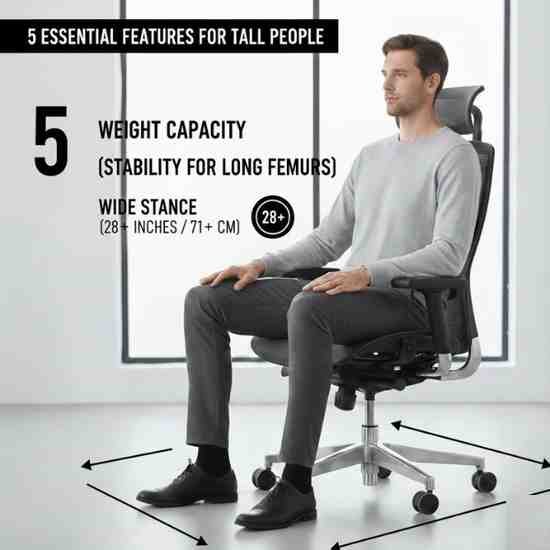
These five structural benchmarks separate marketing claims from true ergonomic engineering. Any serious office chair for tall person must meet all five before it deserves consideration.
Top 3 Ergonomic Office Chairs for Tall People
Below are technical, tall-focused evaluations of three widely recommended chairs that genuinely deliver for users looking for an office chair for tall person above ~6’2″ (188 cm). We emphasize critical measurements, adjustability, and how each model addresses long femurs, torso height, and upper spinal support.
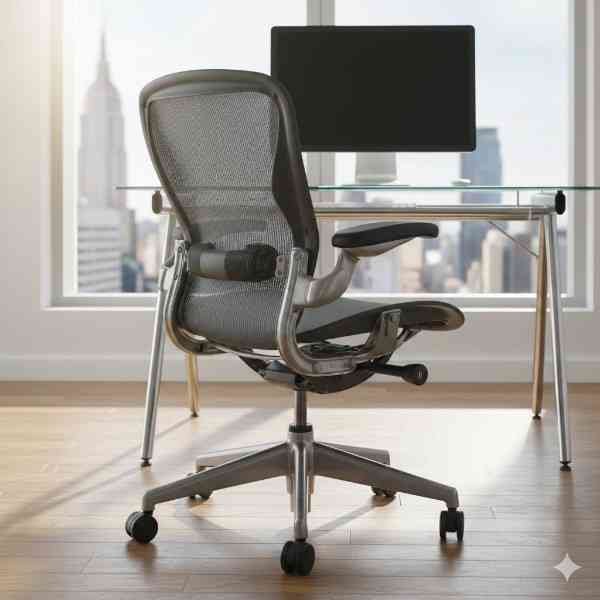
Herman Miller Aeron Size C
The Aeron has been a benchmark in ergonomic seating for decades. The Size C variant targets taller and larger individuals, with a seat height range of approximately 18.3″–23.4″ (46–59 cm) and a seat depth of ~19.7″ (50.2 cm) — both larger than many competitors to accommodate longer femurs and higher popliteal heights.
| Pros | Cons |
|---|---|
| Excellent pelvic tilt control and posture support via optional PostureFit SL®, stabilizing sacrum and lumbar curve | Some tall users report the mesh frame edge can contact the shoulder blades without additional head/neck support |
| Deep, breathable seat pan reduces popliteal pressure | Armrest adjustment ranges may still fall short for very broad or long-limbed users |
| Long-lasting build, up to 12-year warranty — a true lifetime product for many office users |
Why It’s Tall-Friendly
- Size C Dimensions: Engineered for users roughly 5′10″ to 6′7″ (178–200 cm), with an increased backrest height and deeper seat pan to support a longer torso and thighs.
- Pellicle Mesh: Breathable suspension material distributes pressure evenly and avoids hotspots behind knees — crucial for tall users whose thighs may otherwise compress padding.
- Adjustability: Full height-adjustable arms and tilt control permit nuanced alignment across a wider ergonomics range.
Best For: Tall professionals prioritizing sustained posture control and dynamic sitting.
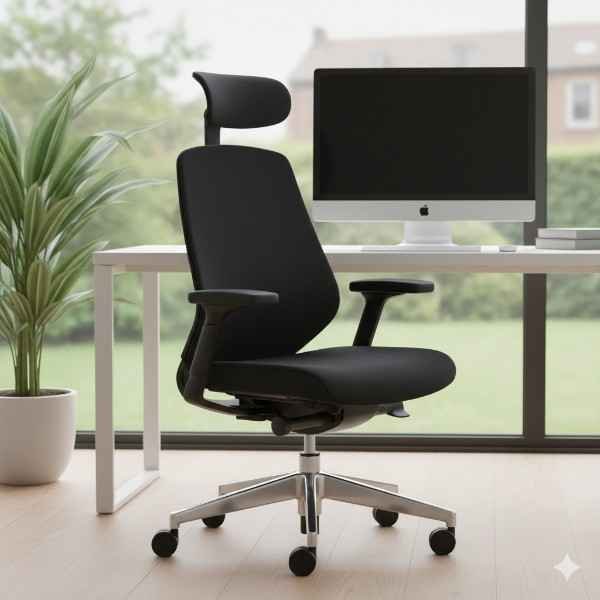
Steelcase Gesture with Headrest
The Gesture isn’t just another office chair — it’s a biomechanically-inspired platform. With an integrated headrest that adjusts vertically and tilts (often ~24″/61 cm backrest height), it addresses a common tall person complaint: lack of upper-spine and cervical support.
| Pros | Cons |
|---|---|
| Outstanding adjustability, especially for multi-device workflows | Premium price point |
| Headrest enhances upper-cervical comfort for 6′3″+ users | Some variations without extended gas cylinders may still max out at ~20.5″ (52 cm) seat height, which is borderline for >6’4″ without a high cylinder option |
| Strong lumbar support that adapts through recline |
Why It’s Tall-Friendly
- Head-and-Neck Reach: Unlike many chairs where the top of the backrest ends several inches below a tall sitter’s shoulder blades, Gesture’s adjustable headrest pivots into proper occipital support.
- Arm and Body Synchronization: 360° armrest motion supports tech use and keeps elbows aligned even with longer arms — reducing shoulder protraction and neck strain.
- Seat Depth & Height: With a seat depth and max height near the upper end of typical office chairs, it handles a wider range of popliteal heights than standard models.
Best For: Tall users (>6’2″) who want true upper-spine and head support without a separate accessory.
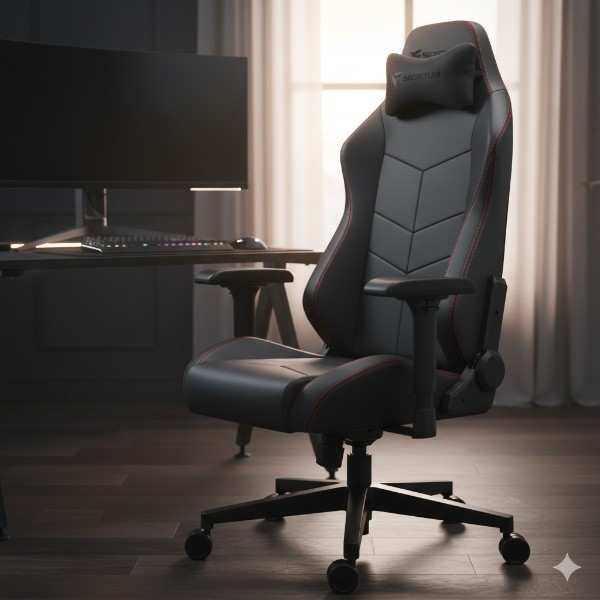
Secretlab Titan EVO XL
While originating in the gaming world, the Titan EVO XL covers many ergonomic bases important to tall office workers. Its XL size extends seat width, depth, and backrest height — making it surprisingly viable as a workstation chair.
| Pros | Cons |
|---|---|
| Large seat footprint reduces stress on thighs and pelvis | Gaming chair form factor means no true seat depth adjustment |
| Excellent customizable lumbar and foam support | Backrest is high but traditional racing shape may not align some torso types as well as dedicated office backs |
| Reclines up to 165°, giving taller users more posture options |
Why It’s Tall-Friendly
- Size XL Fit: Recommended for users ~5′11″–6′9″ (180–206 cm), with a substantial seat height range ~18.1″–21.9″ (46–56 cm) and seat depth ~19.7″ (50 cm).
- 4-Way L-ADAPT™ Lumbar System: Adjustable in/out and up/down to match natural lumbar lordosis (20–45° curvature), which is critical for tall spines with longer lumbar segments.
- Magnetic Memory-Foam Head Pillow: Easy repositioning to support cervical posture when reclining or working.
Best For: Tall users who want a solid blend of comfort, lumbar precision, and stylish design — especially those who alternate between work and long leisure sessions.
Each of these chairs excels in different tall-person dimensions, but all represent some of the most capable ergonomic seating solutions currently available for users over ~6′2″ (188 cm) — from extreme lumbar control to height-optimized back support.
Best Office Chair for Tall Person with High Weight Capacity
When you’re both tall (6’3″ / 190 cm+) and carry higher-than-average mass — whether naturally or due to muscular build — the ergonomic demands on a chair change dramatically. In this “Big & Tall” category, a typical office chair engineered for 250–275 lbs (113–125 kg) simply won’t cut it. For tall, heavier users, the chair must address two structural realities:
1. Load Distribution Is Greater
Longer femurs, a larger torso, and extended backrest height all increase leverage forces on the seat pan and base. Without reinforcement, the chair will sag, deform, and lose ergonomic integrity.
2. Higher Dynamic Forces
Every time you lean back, adjust your posture, or sit down with intention, the gas lift and mechanism absorb higher dynamic loads. A standard gas cylinder can fail prematurely under repeated stress.
That’s why reinforced seat pans and heavy-duty gas lifts are non-negotiable for the Big & Tall user:
- Reinforced Seat Pan: Unlike stamped sheet metal, a reinforced pan (typically thicker gauge steel or reinforced composite) resists bending under continuous load. It preserves seat depth and edge geometry, preventing the painful “caved-in” sensation behind the thighs that aggravates popliteal compression.
- Heavy-Duty Gas Lift (Class 4 High Stroke): A taller user needs a gas lift with extended travel beyond the typical 4–6″ stroke. Big & Tall chairs often use Class 4 high-stroke cylinders rated for sustained loads of 400–500 lbs (181–227 kg) without creep or wobble.
Below are two of the best Big & Tall ergonomic chairs that combine proper height, reinforced internals, and structural stability.
1. Big & Tall Executive Ergonomic Chair (400 – 500 lbs Capacity)
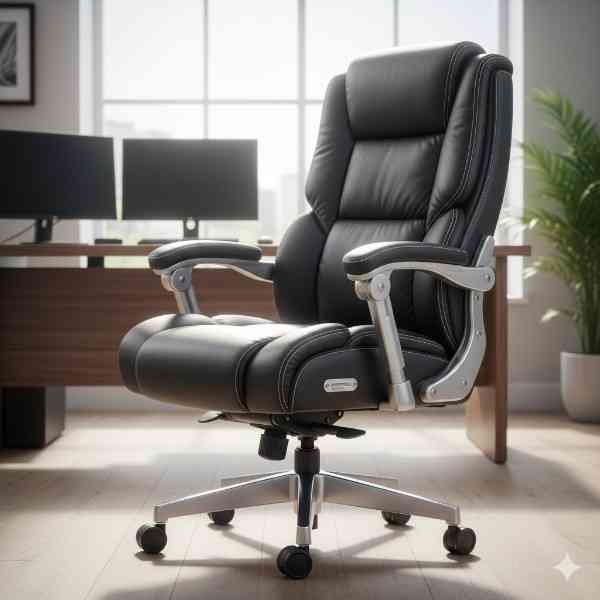
This category of executive ergonomic chair is engineered with:
Structural Specs
- Weight Capacity: ~400–450 lbs (181–204 kg)
- Seat Height Range: ~20″–23″ (51–58 cm) — critical for tall users with knee heights above average
- Seat Depth: ~20″–22″ (51–56 cm), ensuring thigh support past popliteal height
- Base Width: 27″–30″ (69–76 cm) for stability under heavy load
Reinforced Seat Pan
This chair uses a thick, laser-cut steel plate beneath the upholstery, distributing forces across a broader area than a standard stamping. The result is:
- No “bucket effect” after prolonged use
- Even compression across the seat foam
- Longer lasting ergonomic cushioning integrity
Heavy-Duty Gas Lift
Most Big & Tall chairs in this class use Class 4 high-stroke gas lifts with reinforced seals and thicker pistons. This prevents:
- Sudden seat height creep under load
- Jiggle/wobble when seated near max height
- Early failure of the cylinder spring
Additional Reinforcements
- Heavy-duty tilt mechanism calibrated for higher weight
- Oversized aluminum or reinforced nylon 5-star base
- Large diameter dual-wheel casters rated for 400 lbs+
Why It Works for Tall People: The combination of extended height range and robust internals means tall, heavier bodies sit with neutral knees and stable hips — not slumped or compressed.
2. Heavy-Duty Mesh Ergonomic Chair (Up to 500 lbs Capacity)
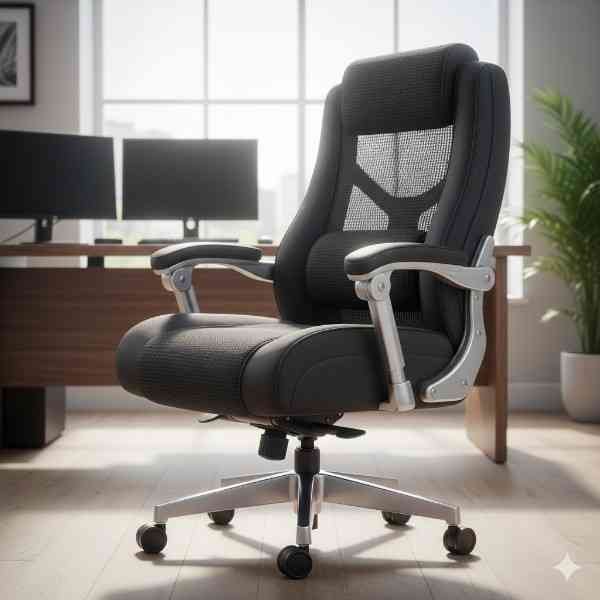
This variant prioritizes breathability while maintaining strength.
Key Specs
- Weight Capacity: ~450–500 lbs (204–227 kg)
- Seat Height: ~20.5″–24″ (52–61 cm) — excellent for 6′4″+ users
- Seat Depth: ~21″–23″ (53–58 cm)
- Backrest Height: Tall backrest with mesh suspension
Reinforced Mesh Frame
Instead of foam, this model uses a heavy-gauge composite frame supporting an engineered mesh pattern. In Big & Tall use, mesh alone often fails unless:
- Frame thickness is increased
- Reinforced ribs counteract bulging under load
This chair solves that with a dual-layer mesh and internal support grid to resist deformation.
Heavy-Duty Mechanism
- Over-engineered tilt assembly with higher preload springs
- XL Class 4 Gas Lift with extended stroke for tall users
- Wider, thicker caster stem and base to reduce vibration and flex
Why It Works for Tall People: It distributes weight across a broader mesh surface and avoids the compression issues tall, heavy sitters experience with foam.
Summary: Structural Must-Haves for Big & Tall
For anyone seeking an office chair for tall person with a higher weight requirement, the chair must include:
- Reinforced seat pan — prevents deformation and maintains ergonomic depth
- Heavy-duty (Class 4) gas lift with extended stroke — supports taller popliteal heights
- Robust tilt and base assembly — stabilizes longer lever arms of tall frames
Without these, even the highest quality chairs will fail prematurely and risk discomfort or injury. Investing in Big & Tall–rated engineering ensures your spine, hips, and knees remain aligned and supported — not stressed.
Why Height Range Matters in an Office Chair for Tall Person
When evaluating an office chair for tall person, the most misunderstood component is the gas lift cylinder. Marketing focuses on “adjustable height,” but for someone 6’4″ (193 cm) or taller, what matters is the stroke length, cylinder class rating, and structural load capacity.
If the cylinder is undersized, everything else — lumbar support, seat depth, headrest — becomes irrelevant.
How a Gas Lift Cylinder Actually Works
A gas lift (pneumatic cylinder) contains compressed nitrogen sealed within a steel tube. When you pull the height lever:
- The valve opens.
- Gas pressure extends or retracts the piston.
- The stroke length determines total height travel.
Two specifications matter most:
- Cylinder Class Rating (Strength)
- Stroke Length (Height Range)
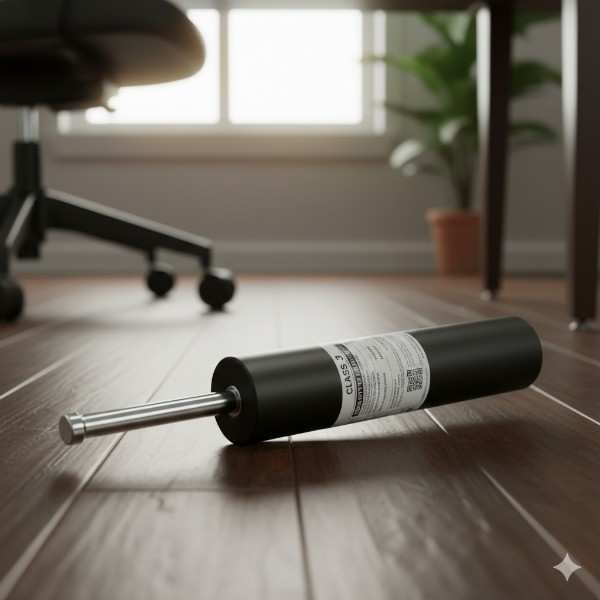
Class 3 Gas Cylinder
- Typical weight capacity: 250–300 lbs (113–136 kg)
- Standard stroke: ~4–5 inches (10–13 cm)
- Common in mid-range office chairs
- Often caps seat height at 19–21 inches (48–53 cm)
Suitable for average-height users.
Not ideal for tall individuals over 6’2″ (188 cm).
Class 4 Gas Cylinder (Recommended for Tall Users)
- Rated for 300–400+ lbs (136–181+ kg)
- Thicker steel walls and reinforced seals
- Longer stroke options: 5–8 inches (13–20 cm)
- Enables seat heights of 21–24+ inches (53–61+ cm)
For tall users, Class 4 cylinders provide:
- Greater vertical extension
- Reduced wobble at max height
- Improved durability under long femur leverage forces
If you are 6’4″ or taller, Class 4 is non-negotiable.
Is a 21-Inch Maximum Seat Height Enough for 6’4″+?
To determine this, you must calculate your popliteal height (floor to underside of knee while standing).
Typical popliteal heights:
- 6’2″ (188 cm): ~20–21 inches (51–53 cm)
- 6’4″ (193 cm): ~21–22 inches (53–56 cm)
- 6’6″ (198 cm): ~22–23 inches (56–58 cm)
For ergonomic alignment:
- Feet must rest flat
- Knees at 90–100°
- Hips slightly above knee level (about 0.5–1 inch / 1–2.5 cm higher)
If a chair maxes at 21 inches (53 cm):
- It may barely work for 6’2″
- It is typically too low for 6’4″+
- It forces posterior pelvic tilt and L4–L5 disc compression
Quick Self-Test
If you must:
- Extend your knees forward to sit comfortably
- Raise your desk unnaturally high
- Feel pressure in the front of your hips
The seat height is insufficient.
The Bottom Line
For anyone searching for a true office chair for tall person above 6’4″:
- Look for maximum seat height of at least 22–23 inches (56–58 cm)
- Confirm a Class 4 gas cylinder
- Verify stroke length in product specs (rarely advertised — ask manufacturers if needed)
Height adjustability is not a marketing feature — it is a biomechanical requirement.
The Spinal Health Imperative for Tall Users
For tall individuals, spinal support is not optional comfort — it is structural necessity. A poorly sized office chair for tall person fails in two critical regions: the lumbar spine (L1–L5) and the thoracic spine (T1–T12). When support misses these anatomical targets, long-term musculoskeletal strain becomes inevitable.
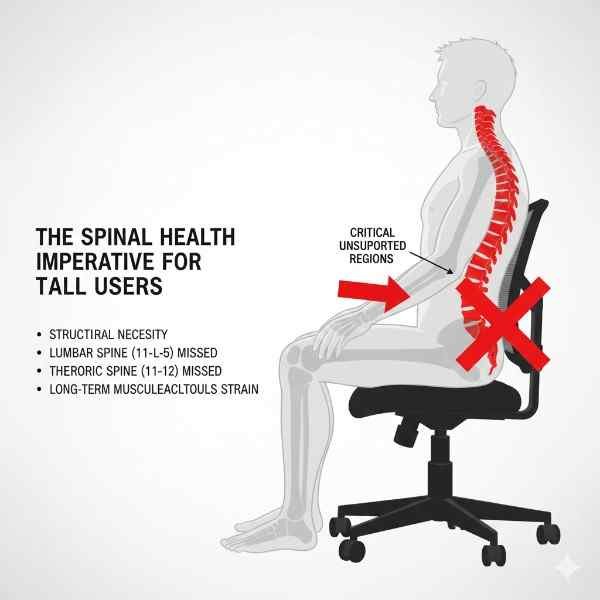
Lumbar Alignment: Hitting L4–L5 Precisely
The lumbar spine carries the majority of compressive load while seated. The most vulnerable segment is L4–L5, where disc herniations and nerve impingement frequently occur.
In average-height chairs:
- Lumbar support is fixed at ~6–8 inches (15–20 cm) above the seat pan.
- Designed for a torso length of ~24–26 inches (61–66 cm).
- Works for someone ~5’8″–5’10” (173–178 cm).
For someone 6’4″ (193 cm) or taller:
- Seated torso length may measure 28–32 inches (71–81 cm).
- Fixed lumbar support lands too low — often at L5 or even sacral level.
- This causes posterior pelvic tilt and flattening of natural lordosis.
Without correct lumbar positioning:
- Disc pressure increases by up to 40% compared to neutral posture.
- Paraspinal muscles remain in constant isometric contraction.
- Over time, inflammation and nerve irritation can develop.
This is where vertically adjustable lumbar support becomes critical.
What Tall Users Need:
- At least 2–4 inches (5–10 cm) of vertical lumbar travel.
- Depth adjustment (in/out) of 1–2 inches (2.5–5 cm).
- Support that aligns specifically with L3–L5, not the sacrum.
If the lumbar pad cannot reach your natural inward curve, the chair is structurally incompatible.
Thoracic Support: Preventing Upper Back Collapse
Tall users often experience a second issue: insufficient thoracic support.
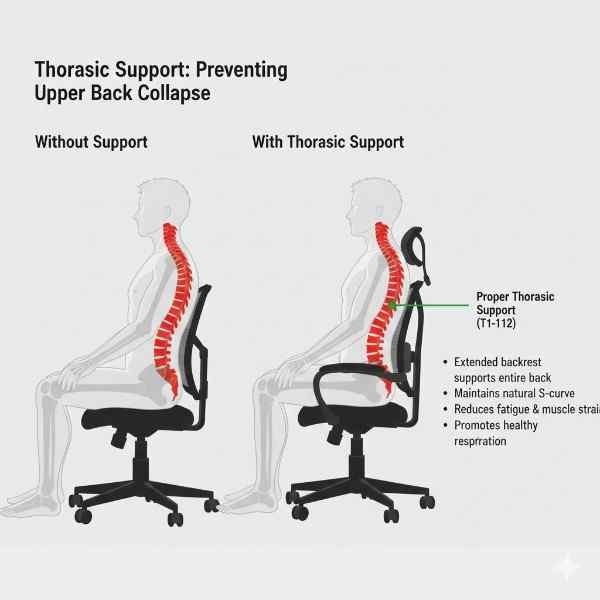
Standard backrests:
- End too low (mid-scapular level).
- Allow the upper spine to round forward.
- Encourage forward head posture.
When thoracic support is inadequate:
- Shoulders protract.
- Cervical spine extends forward.
- Neck muscles compensate, increasing strain.
A tall-friendly backrest should:
- Extend at least 26–30 inches (66–76 cm) above the seat.
- Support up to the inferior angle of the scapula.
- Allow recline tension that supports a longer spinal column.
The Link to Sciatica and Chronic Pain
Improper lumbar alignment increases pressure on intervertebral discs. When disc bulging occurs at L4–L5 or L5–S1, it can irritate the sciatic nerve, producing:
- Radiating leg pain
- Tingling or numbness
- Weakness in glutes or hamstrings
While a chair does not directly “cause” sciatica, sustained poor posture dramatically increases risk.
For tall individuals, the wrong chair accelerates:
- Lumbar disc degeneration
- Facet joint irritation
- Chronic muscular imbalance
The Takeaway
A legitimate office chair for tall person must provide:
- Vertically adjustable lumbar support
- Adequate thoracic backrest height
- Dynamic recline that maintains spinal curvature
If the lumbar support cannot reach your spine’s natural curve, you are not sitting ergonomically — you are compressing your future mobility.
Budget Chairs Under $300 That Work for Tall Users
Finding a true office chair for tall person under $300 isn’t easy — most budget models are engineered around average-height users and cut corners in adjustability or durability. However, with careful selection, you can get real ergonomic value without overspending. Below are two budget chairs that stand out for taller users, with honest notes on where they underperform.
1. Sihoo M57 — Budget Mesh Chair With Tall-Friendly Dimensions
The Sihoo M57 combines affordability with ergonomic features that make it one of the best options for taller individuals under $300. According to spec listings, the M57 offers a seat depth of ~20.5″ (52 cm) and a backrest height of about 26″ (66 cm) — deeper and taller than many entry-level chairs, and closer to what a person over 6′2″ (188 cm) needs.
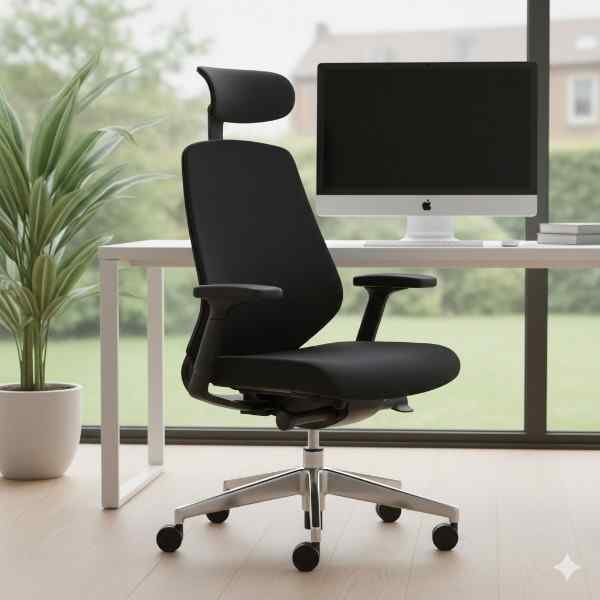
Tall-Friendly Highlights
- Extended seat depth: Helps support longer femurs without excessive popliteal pressure.
- High backrest: Taller back height improves thoracic support compared to typical budget chairs.
- Adjustable tilt and recline: Not just fixed position — meaning you can find a more natural posture even on a tighter budget.
Where It Cuts Corners
- Armrests: While height-adjustable, motions are usually limited — no full 3- or 4-way adjustments.
- Material Quality: Breathable mesh is great for ventilation, but the frame and plastic components are thinner than higher-end chairs.
Why It’s Still a Win
For tall users who must stay under $300, the M57 delivers deeper seating and a taller backrest — structural attributes often missing at this price point. That means better biomechanical fit and less slouching or neck strain than many generic budget options.
2. Yamasoro YR-2 — Premium Budget Office Mesh Chair
The Yamasoro YR-2 brings a slightly more robust feel while still remaining below the $300 mark. Its standout feature is a multi-stage lumbar support system that can be moved up and down, a rare find in budget categories.
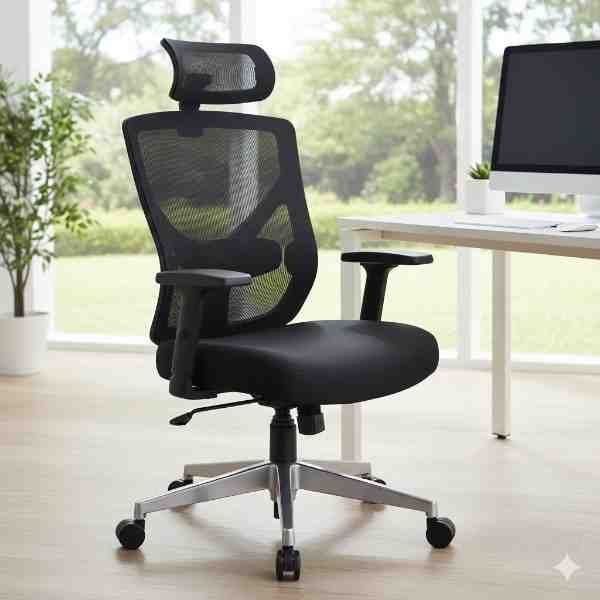
Tall-Friendly Highlights
- Adjustable lumbar positioning: Helps align the support with your L3–L5 curve, which is critical for taller spines.
- Reinforced waterfall edge: Reduces pressure behind the knees — especially helpful for those with long femurs.
Where It Cuts Corners
- Seat Height: Though deeper than competitors, the maximum height often still peaks near 20.3″ (52 cm) — borderline for users ~6′4″ (193 cm) or taller.
- Frame Plastic Quality: Reinforcements exist, but materials feel lighter and may show wear faster.
Why It’s Still a Win
On pure ergonomic value — especially lumbar adjustability — the YR-2 punches above its price. For taller users on a budget, the ability to tune support vertically is huge for long-term comfort and spinal health.
Honest Budget Considerations
When shopping sub-$300 for tall users:
- Armrest adjustability often suffers: Most budget chairs only offer height adjustment (if that). That’s fine if your elbows can rest naturally, but it’s a compromise compared to premium 3D/4D arms.
- Material longevity isn’t premium: Mesh and plastic components on budget models are lighter and may compress or loosen over time.
- Seat height ceilings can be borderline: If max height hovers around 20–20.5″ (51–52 cm), it may be fine for users 6′2″ (188 cm) but barely adequate for 6′4″+ (193 cm).
The Bottom Line
Budget chairs under $300 for tall users need to be chosen based on fit metrics — deeper seats, taller backrests, vertical lumbar adjustability — rather than brand or price alone. Sihoo M57 and Yamasoro YR-2 both offer structures and adjustments that work for taller bodies, even if they compromise slightly on arm adjustability or materials. For tall professionals or students constrained by cost, these models deliver real ergonomic value where most generic budget chairs fall short.
FAQ’s — Tall Office Chair Questions
What seat height is ideal for someone over 6 feet tall?
Why do standard office chairs cause back pain for tall people?
How do I measure my correct seat height?
– Feet flat on the floor
– Knees at 90–100°
– Hips slightly higher than knees (0.5–1 inch)
What seat depth is best for tall users?
Is a headrest necessary for tall people?
Are mesh chairs better than foam chairs for tall users?
What gas cylinder class should a tall person choose?
Can a tall person use a gaming chair comfortably?
Is a 21-inch maximum seat height enough for 6’4″?
What weight capacity should tall individuals look for?
How do I know if my lumbar support is positioned correctly?
Why do my legs go numb in a standard office chair?
Should tall people use a footrest?
What backrest height is recommended for tall users?
What are the best premium chairs for tall professionals?
If you remember one thing from this guide, remember this:
The best office chair for tall person is not the most expensive — it is the one that matches your anthropometric measurements.
For most tall users (6’2″–6’6″ / 188–198 cm), the strongest overall recommendation is:
- Maximum seat height of at least 22–23 inches (56–58 cm)
- Seat depth of 20–22 inches (51–56 cm)
- Backrest height of 26–30+ inches (66–76+ cm)
- Vertically adjustable lumbar support
- Class 4 gas cylinder
If budget allows, a premium ergonomic chair with precise lumbar tuning and extended height range will outperform any mid-tier alternative over the long term. If budget is limited, prioritize seat height and seat depth first — these are the structural foundations of fit.
Tall bodies are not “oversized versions” of average bodies. They require different leverage tolerances, longer support surfaces, and higher spinal contact points. When those are correct, posture becomes effortless instead of exhausting.
Your chair should disappear beneath you — not constantly remind you that it doesn’t fit.